🌱 Dischidia nummularia (String of Nickels)
Dischidia nummularia, commonly known as the String of Nickels, captivates indoor plant enthusiasts with its unique cascading habit and charming coin-like foliage. Often sought after for its easy-going nature and epiphytic growth habits, this plant makes an excellent addition to various indoor environments. While it is primarily grown for its foliage, the occasional blooms can surprise the attentive caretaker. Known for its adaptability, String of Nickels is suitable for diverse indoor settings, making it a versatile choice for those looking to add a touch of greenery to their homes or offices.
🧾 Quick Facts
The String of Nickels, scientifically named Dischidia nummularia, is a popular houseplant known for its round, succulent-like leaves and trailing stems. Below are some quick facts about this intriguing plant:
- Common names: String of Nickels, Button Orchid
- Scientific name: Dischidia nummularia
- Plant type: Vine, Epiphyte
- Growth habit: Trailing
- Typical indoor size range: Trails up to 3–6 feet
- Growth speed: Moderate
- Lifespan: Can live many years with proper care
- Origin: Southeast Asia
- Light preference: Bright indirect light
- Water needs: Moderate; prefers to dry out slightly between waterings
- Temperature & humidity preference: Prefers warm, humid conditions
- Pet safety: Generally considered non-toxic to pets
- Difficulty: Medium
🔍 Identification & Look-Alikes
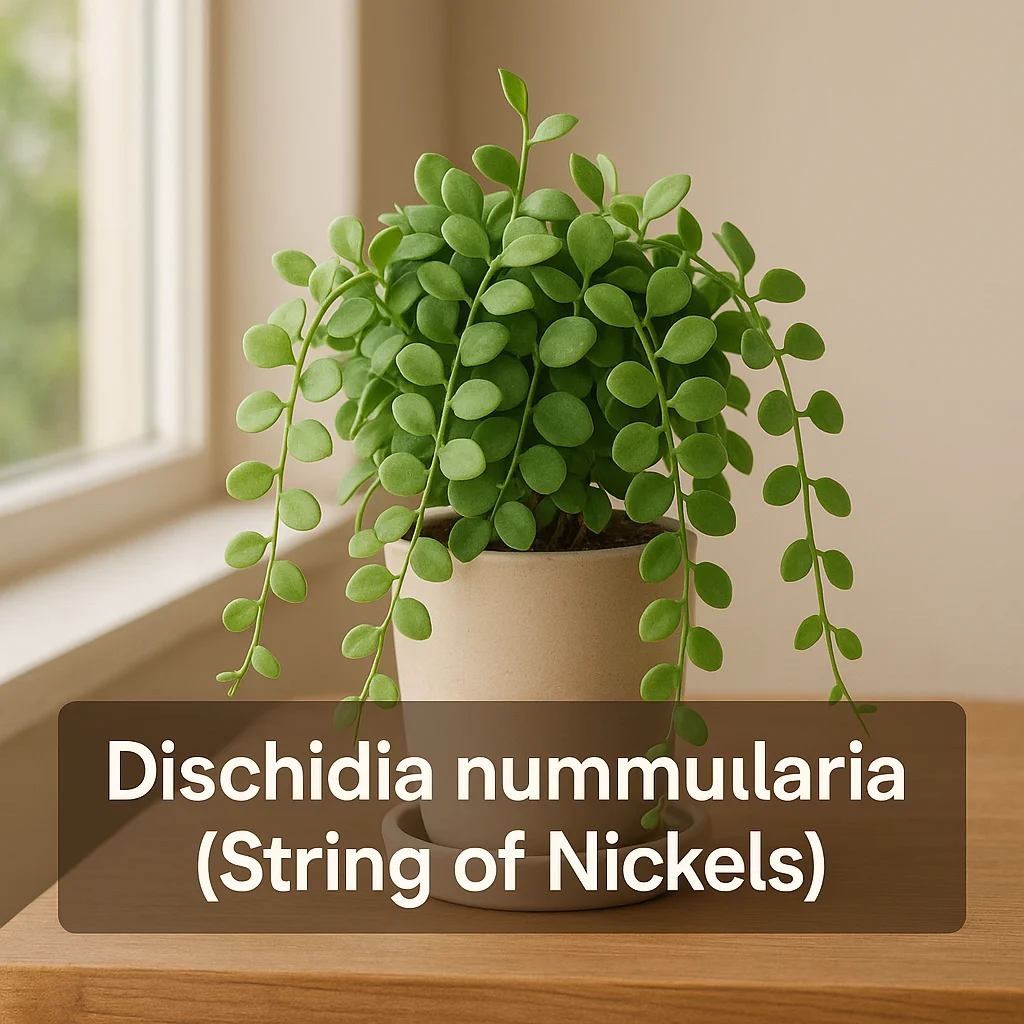
Dischidia nummularia is recognized by its distinctive round, flattened leaves resembling small coins or nickels. The leaves are fleshy and exhibit a soft green color that may develop a hint of red blush under bright light. The plant's stems are thin, flexible, and capable of clinging or trailing, making it ideal for hanging baskets, where it can cascade beautifully. While mostly grown for its appealing foliage, it may occasionally produce small, inconspicuous white flowers.
Common look-alikes include other Dischidia species and certain Peperomia varieties. Its coin-like leaves set the String of Nickels apart, differing notably from the larger leaves of Hoya species, which can often cause confusion.
- Top ID Tips:
- Round, nickel-sized leaves
- Fleshy, soft green texture
- Trailing or clinging growth habit
- Thin, wire-like stems
- Occasional white flowers (small, not showy)
- Leaf color may redden with light
- Often found in hanging baskets
- Cascading, dense foliage appearance
- Can be mounted on boards or held in terrariums
🌍 Origin & Natural Habitat
Dischidia nummularia is native to the warm, humid regions of Southeast Asia, thriving in rainforest environments where it typically grows as an epiphyte. In the wild, it is found clinging to tree trunks or rocks, benefiting from the dappled sunlight filtering through the forest canopy. Understanding its natural epiphytic and humid habitat can guide indoor growers in replicating similar conditions – high humidity, warm temperatures, and indirect light are key to thriving String of Nickels indoors.
☀️ Light Requirements
To ensure healthy growth, place your Dischidia nummularia in a bright spot with indirect light. It particularly enjoys morning sunlight or filtered light from a north or east-facing window. Avoid direct sun exposure, which can scorch the delicate leaves. If light conditions are too low, the plant may exhibit sparse growth or lose its appealing leaf coloration.
- Light Checklist:
- Bright but indirect light is ideal
- East or north-facing windows recommended
- Morning sun is beneficial
- Avoid prolonged direct sunlight
- Watch for fading color as a sign of low light
- Use sheer curtains to diffuse light if necessary
- Lamps can supplement light in dim rooms
- Rotate occasionally for even growth
- Leaf scorching indicates too much light
💧 Watering & Humidity
The String of Nickels prefers a soak-and-drain watering method, allowing the soil to dry slightly between waterings. In its epiphytic nature, ensure aerated soil conditions, as it does not tolerate soggy roots. Adapt watering frequency according to the season, ensuring less water during winter. This plant thrives in humid environments, so consider using a pebble tray or humidifier to maintain humidity levels.
- Watering Tips:
- Allow soil to dry slightly before watering
- Reduce watering in cooler months
- Increase humidity using a humidifier
- A pebble tray helps maintain moisture
- Yellowing leaves may indicate overwatering
- Wilting suggests underwatering
- Ensure pots have adequate drainage
- Avoid wetting leaves for long periods
- Adapt watering to environmental changes
🐛 Soil, Pot & Repotting
Utilize a well-draining potting mix suitable for epiphytes, incorporating materials such as orchid bark, coconut coir, or perlite. A terracotta pot with drainage holes aids in maintaining appropriate moisture levels and airflow to the roots. Repotting is typically needed every two years or when you observe slow growth and root binding. Select a pot only slightly larger to facilitate drainage and root health.
- Repotting Checklist:
- Use an epiphyte-friendly mix
- Incorporate orchid bark or perlite
- Choose pots with drainage holes
- Consider terracotta for breathability
- Repot every two years or as needed
- Root-bound plants signal repotting time
- Upsize pots conservatively
- Check for water retention during repotting
- Be gentle with roots during transition
🌡️ Temperature, Airflow & Seasonal Care
Dischidia nummularia enjoys warm temperatures ranging from 60 to 80°F (16 to 27°C). Avoid placing it near drafts, HVAC vents, or heaters that might create rapid temperature shifts. During winter, reduce watering and maintain a stable environment. As with many houseplants, the growth rate may diminish during cooler months.
- Seasonal Notes:
- Prefers stable, warm temperatures
- Avoid drafts and direct AC/heat exposure
- Lower growth during winter
- Monitor humidity in winter months
- Adjust care for sunlight reduction in winter
- Consistent temperatures ease stress
- A stable location prevents shock
- Use fans gently for better airflow
🌸 Flowers, Fruit & Growth Cycle
Though Dischidia nummularia is mainly celebrated for its foliage, under optimal conditions, it can produce small white to creamy flowers. These blooms are often tiny and not particularly striking, highlighting the plant’s use primarily as a foliage centerpiece. The growth cycle includes new leaves sprouting sequentially along its trailing stems, creating dense and lush growth if routinely cared for.
🧬 Propagation & Reproduction
Propagation of String of Nickels is commonly achieved via stem cuttings. Select healthy sections and place them in a moist sphagnum moss mix or directly in water until roots develop. Division is less common but possible when repotting a mature, vigorous plant.
- Propagation Tips:
- Use sharp, sterile tools for cutting
- Root cuttings in moss or water
- Choose healthy, robust stems
- Maintain high humidity for new roots
- Be patient as roots establish
- Use root hormone for quicker results
- Avoid propagating sick or damaged sections
- Transition rooted cuttings gently to soil
🌿 Common Problems, Pests & Prevention
Common issues with Dischidia nummularia include yellowing leaves, which often indicate overwatering, and brown leaf tips, a sign of dry air. Regular care can mitigate leggy growth and drooping. Common pests like spider mites and mealybugs can be deterred with vigilant leaf cleaning and appropriate humidity levels. Stable conditions and prompt isolation of new plants help prevent infestations.
- Prevention Basics:
- Isolate new plants initially
- Wipe leaves to deter dust and pests
- Adjust watering to prevent soggy roots
- Keep a consistent care routine
- Increase humidity to deter dry air bugs
- Monitor for signs of pests regularly
- Prevent mold through adequate airflow
- Use neem oil or insecticidal soap cautiously
🐾 Pet & Home Safety Notes
Dischidia nummularia is generally considered non-toxic to pets, although ingestion may cause mild stomach upset in some pets or individuals. To ensure the safety of both children and pets, keep the plant out of reach or allow them limited access. Should accidental ingestion occur, it's always prudent to consult a professional or local poison control resources as a precaution.
🏡 Styling Ideas & Best Room Placement
Given its trailing habit, the String of Nickels excels when placed in hanging baskets or on elevated shelves in bathrooms, kitchens, or bright living rooms where humidity is naturally higher. Its delicate, cascading form also pairs beautifully with other tropical species, creating a lush, vibrant haven indoors. When combined with upright plants, it adds textural contrast and visual interest.
📌 Summary
- Recognized by its coin-shaped leaves
- Native to Southeast Asia's rainforests
- Thrives in bright, indirect light
- Water only when the soil begins to dry
- Prefers orchid bark mixes in terracotta pots
- Loves warm, humid surroundings
- Easily propagated by stem cuttings
- Watch for overwatering and pests
- Suits various indoor decor styles
- Considered generally pet-friendly