🌱 Goldfish Plant (Nematanthus gregarius)
🧾 Quick Facts
The Goldfish Plant, scientifically known as Nematanthus gregarius, is a charming houseplant prized for its vibrant blooms and trailing growth habit. Here are some key facts about this delightful plant:
- Common names: Goldfish Plant, Guppy Plant
- Scientific name: Nematanthus gregarius
- Plant type: Flowering vine
- Growth habit: Trailing
- Typical indoor size range: 1 to 3 feet length
- Growth speed: Moderate
- Lifespan: Can live many years with proper care
- Origin: Tropical regions of South America
- Light preference: Bright indirect light; can tolerate some direct sunlight
- Water needs: Moderate; prefer drying slightly between waterings
- Temperature & humidity preference: Warm temperatures; high humidity favoured
- Pet safety: Some sources list it as irritating
- Difficulty: Medium
🔍 Identification & Look-Alikes
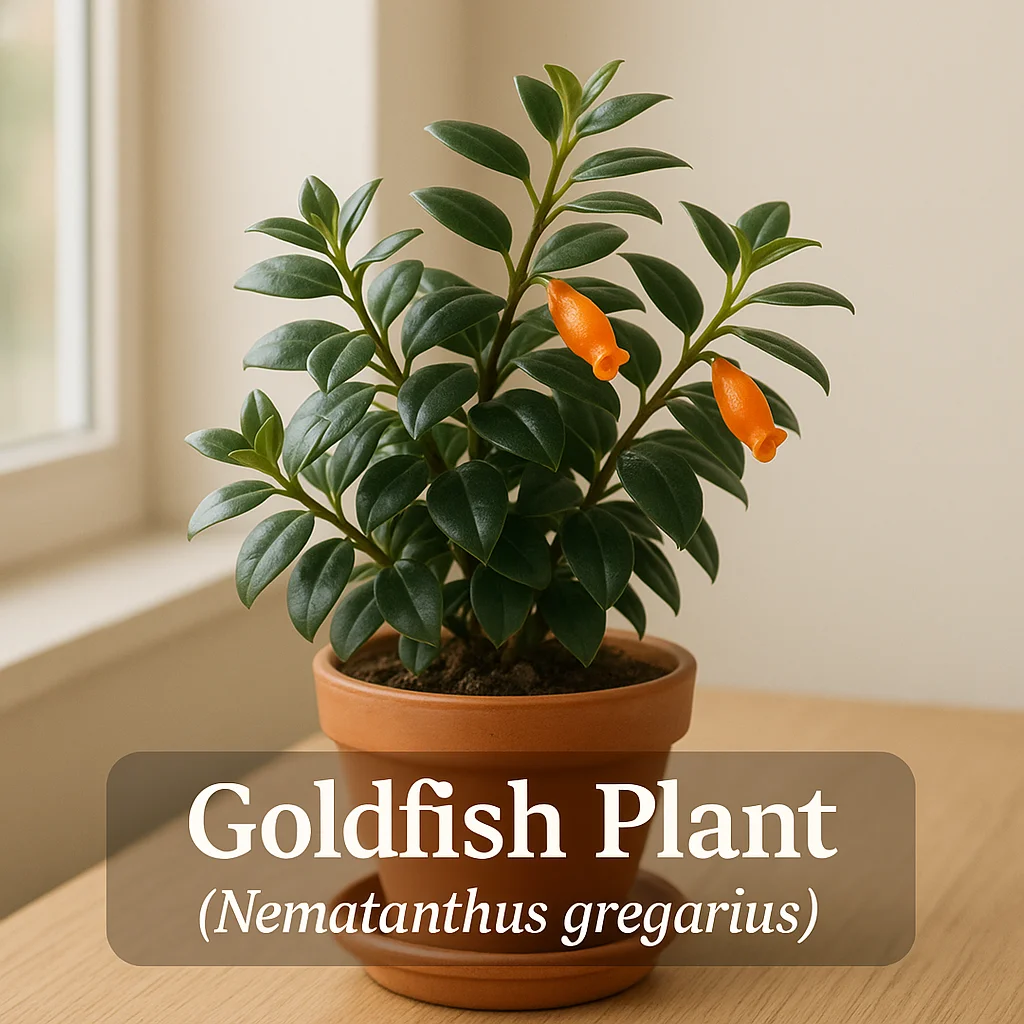
The Goldfish Plant is distinguished by its glossy, oval leaves and a cascading growth pattern. Its leaves are small, opposite, and dark green, with a waxy texture that gives the plant an attractive sheen. The plant typically features reddish-brown stems which contrast beautifully with the green foliage.
The most striking feature is its unique, tubular flowers resembling leaping goldfish, which can be vivid orange to red in color. These flowers often bloom under ideal indoor conditions.
Common look-alikes include Lipstick Plant (Aeschynanthus species), which shares a similar trailing habit and flower shape, but typically has larger and differently colored blooms. To distinguish, remember that Goldfish Plant flowers are often smaller and distinctly shaped like a fish.
- Small, glossy, oval leaves
- Tubular, orange-red flowers like miniature goldfish
- Trailing stem structure
- Reddish-brown stems
- Similar to Lipstick Plants - check flower size and color
- Flowers may appear more during spring and summer indoors
- Look for waxy texture on leaves
🌍 Origin & Natural Habitat
The Goldfish Plant hails from the tropical rainforests of South America, particularly Brazil. In its natural habitat, it thrives as an epiphyte, clinging onto trees but not parasitically, taking advantage of the filtered light coming through the forest canopy. This environment is characterized by high humidity, consistent rainfall, and warm temperatures.
Understanding the natural habitat helps homeowners mimic similar conditions indoors by providing ample indirect light, maintaining higher humidity, and avoiding dry or hot environments that could stress the plant.
☀️ Light Requirements
For optimal growth, place the Goldfish Plant in a location with bright, indirect light. East or west-facing windows work well, but be sure to filter the light if it seems too intense. Bright indirect light means the plant should be in a well-lit room where sunlight does not hit it directly, like a sunlit room filtered through sheer curtains.
Too little light will result in fewer blooms and leggy growth, while too much direct sunlight can scorch its leaves, causing browning tips and leaf drop.
- Easts or west windows are ideal
- Avoid direct midday sun
- Maintain filtered light to enhance flowering
- Signs of too little light: sparse growth, no flowers
- Signs of excessive light: browning or scorched leaves
- Rotate the plant periodically for even light exposure
💧 Watering & Humidity
The Goldfish Plant prefers a consistent yet moderate watering routine. Allow the top inch of soil to dry out between waterings, using a soak-and-drain method to prevent waterlogging. The plant's water needs may change with pot size, light exposure, and seasonal variations, typically decreasing in the winter.
Maintaining relatively high humidity is also favorable. Increasing humidity can be achieved by placing the plant near a humidifier or on a pebble tray. Overwatering can lead to root rot, while underwatering may cause leaf curling and wilting.
- Let the top inch of soil dry before watering again
- Use pots with drainage holes
- Watering frequency varies with season and environment
- Boost humidity with humidifiers or pebble trays
- Yellow leaves can indicate overwatering
- Wilting could mean underwatering or low humidity
🐛 Soil, Pot & Repotting
Goldfish Plants thrive in a light, well-draining potting mix. A mix containing peat moss, perlite, and orchid bark helps provide both moisture retention and adequate drainage.
Select pots with drainage holes to prevent excess water accumulation. Terracotta pots can help wick moisture away, beneficial in more humid environments. Repotting is typically required every 2-3 years or when growth slows, the plant becomes root-bound, or water runs straight through the pot.
- Use a mix of peat, perlite, and orchid bark
- Choose pots with essential drainage holes
- Repot every 2-3 years
- Upsize the pot gradually - one size larger
- Signs for repotting: roots visible in drainage holes
- Avoid overcompacting the soil
🌡️ Temperature, Airflow & Seasonal Care
The Goldfish Plant appreciates warm indoor temperatures ranging from 65°F to 80°F. Avoid cold drafts or placements near AC units or heaters that create temperature fluctuations. During winter, the plant's growth generally slows, necessitating reduced watering and adjustment in humidity care.
Ensure proper airflow around the plant to prevent mold and pests, and shield it from drastic temperature changes.
- Ideal temperature range: 65°F to 80°F
- Protect from sudden temperature shifts
- Reduce watering slightly in winter
- Monitor for drafty or stagnant air areas
- Avoid placing close to radiators or AC vents
🌸 Flowers, Fruit & Growth Cycle
Goldfish Plants are capable of flowering indoors, chiefly during the spring and summer months when conditions are optimal. The flowers are small, tubular, and vividly colored orange or red, striking against the green leaves. Indoor fruiting is uncommon and is mainly grown for its blossoms and decorative foliage.
The plant produces new leaves and flowers primarily during the growing season, with occasional pruning needed to maintain its shape and encourage bushier growth.
🧬 Propagation & Reproduction
The Goldfish Plant is relatively straightforward to propagate via stem cuttings. Select healthy stems with a few leaf nodes, and root them in water or a well-draining potting mix. Providing warmth and consistent moisture can improve success.
Propagation can be accomplished at any time but is most successful in spring or early summer when the plant is naturally gearing up for growth.
- Use healthy stem cuttings with 2-3 nodes
- Rinse and dry cuttings slightly before planting
- Ensure a humidity-rich environment
- Root in water first or directly in soil
- Spring and early summer present optimal times
🌿 Common Problems, Pests & Prevention
Goldfish Plants may face issues such as yellowing leaves, brown leaf tips, and leggy stems. These often arise from incorrect watering, light levels, or low humidity. Common pests include spider mites and mealybugs that can stress the plant, especially in drier indoor climates.
Prevention is best through regular plant inspections, rinsing foliage with water, maintaining humidity, and avoiding overwatering. Always clean new plants before introducing them to your collection to prevent pest spread.
- Inspect for pests regularly
- Stable and consistent watering is key
- Ensure adequate humidity levels
- Yellow leaves often signal overwatering
- Clean leaves frequently to remove dust
- Isolate new plants to prevent contamination
🐾 Pet & Home Safety Notes
Some sources indicate that the Goldfish Plant may have irritating properties if ingested by pets or children. To mitigate risk, place the plant out of reach of curious pets or toddlers. If ingestion is suspected, contacting a professional or local poison control resources is advised.
Always monitor for any signs of irritation or discomfort if your pets or family members interact with houseplants.
🏡 Styling Ideas & Best Room Placement
The versatile Goldfish Plant fits beautifully into various indoor settings, from hanging baskets in well-lit kitchens and bathrooms to a decorative touch in bright living rooms. Its trailing nature makes it an ideal candidate for high shelves or hanging arrangements, where its trailing vines can cascade down beautifully.
Pair the Goldfish Plant with ferns or other humidity-loving houseplants to create a lush indoor jungle vibe.
📌 Summary
- Understand the Goldfish Plant by its unique, fish-shaped flowers and trailing stems
- Originates from the tropical rainforests of South America
- Benefits from bright, indirect light and warm, humid conditions
- Water moderately, allowing soil to dry slightly between waterings
- Prefers a light, well-draining soil mix and consistent repotting
- Adaptability to various indoor environments makes it a popular choice
- Prone to common houseplant pests - monitor and maintain hygiene
- Propagation through stem cuttings is effective and rewarding
- Ranked medium in care difficulty suitable for intermediate plant enthusiasts
- Exercise caution with pets due to potential irritants