🌱 Hoya carnosa (Wax Plant)
🧾 Quick Facts
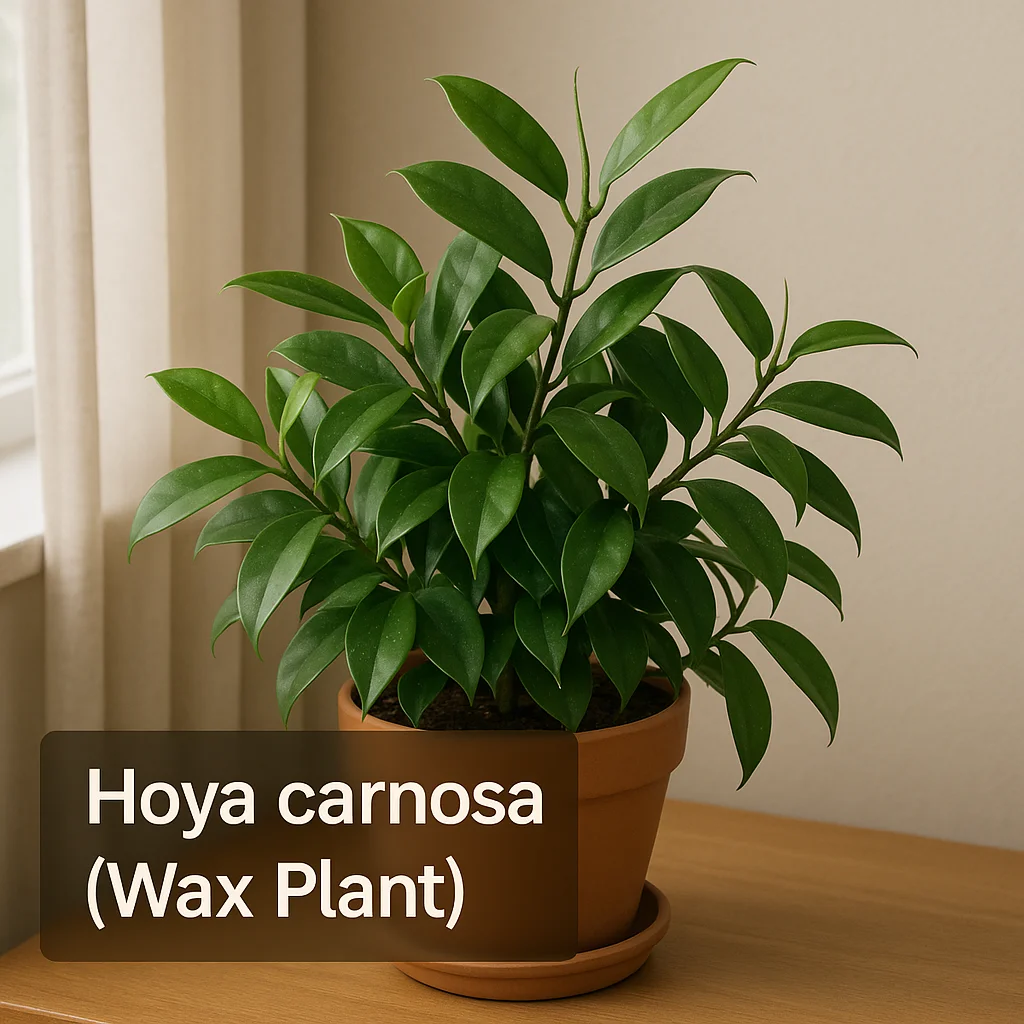
The Hoya carnosa, commonly known as the Wax Plant, is a popular choice among indoor plant enthusiasts for its attractive foliage and occasional stunning blooms. This versatile houseplant is known for being relatively low-maintenance and rewarding with the right care.
- Common names: Wax Plant, Porcelain Flower
- Scientific name: Hoya carnosa
- Plant type: Vine, flowering
- Growth habit: Trailing or climbing
- Typical indoor size range: 1 to 3 feet in length
- Growth speed: Moderate
- Lifespan: Can live many years with care
- Origin: Southeast Asia, Australia
- Light preference: Bright indirect; can tolerate some direct sun
- Water needs: Moderate; allow soil to dry slightly between waterings
- Temperature & humidity preference: Prefers warmer temperatures (65–80°F); moderate to high humidity
- Pet safety: Some sources list it as potentially irritating/toxic to pets
- Difficulty: Easy to medium
🔍 Identification & Look-Alikes
The Hoya carnosa is identifiable by its thick, waxy leaves that are typically dark green, though variegated forms may have cream or pink-tinted patterns. The leaves are arranged opposite each other along slender vines that may climb or trail depending on how they are supported. While the plant is mainly grown for its foliage, it can produce fragrant, star-shaped flowers that are typically white or pink.
It can be confused with other Hoya species, but its distinctively larger, round leaves can set it apart. Unlike Hoya pubicalyx, which has narrower leaves and a faster growth rate, Hoya carnosa's leaves are broader and feel waxy to the touch.
- Top ID Tips:
- Waxy, dark green leaves
- Opposite leaf arrangement on vines
- Fragrant, star-shaped flowers (when blooming)
- Thick, green stems
- Variegation with cream/pink if present
- Leaves slightly curved with pronounced veins
- Tolerates some direct sunlight
🌍 Origin & Natural Habitat
Hoya carnosa originates from Southeast Asia and Australia, thriving in tropical climates as an epiphytic vine. In the wild, it clambers over trees and shrubs, benefiting from the filtered light and humidity of the forest understory. Understanding this habitat helps guide its care indoors; mimicking tropical conditions by providing bright, indirect light and higher humidity will best support its growth and potential for flowering.
☀️ Light Requirements
For optimal growth, place your Hoya carnosa in a spot with bright, indirect light. East or west-facing windows are ideal, where they can receive morning or late afternoon sun. While this plant can tolerate some direct sunlight, excessive direct sun, especially in a south-facing window, can cause leaf scorching and color fading. On the contrary, too little light may lead to sparse flowering and elongated, leggy growth.
- Seek east or west-facing windows
- Avoid harsh midday sun
- Bright indirect light mimics forest understory
- Monitor for leggy growth as an indicator of low light
- Faded leaf color may suggest overexposure
- Rotate plant occasionally for even growth
💧 Watering & Humidity
Water your Hoya carnosa moderately, allowing the top soil to dry out slightly between waterings. The soak-and-drain method works well, ensuring thorough watering until it drains from the pot's bottom, then allowing the soil to dry out afterward. In winter, reduce watering as plant growth slows.
This plant appreciates higher humidity levels, akin to the tropical environment it originates from. Consider using a pebble tray or humidifier to increase humidity if your home is particularly dry. Signs of overwatering include yellowing leaves, while underwatering may lead to leaf shriveling.
- Water when top of the soil is dry
- Soak-and-drain for thorough watering
- Reduce watering frequency in winter
- Use pebble trays for increased humidity
- Yellow leaves indicate potential overwatering
- Dry, shriveled leaves suggest underwatering
🐛 Soil, Pot & Repotting
A well-draining, airy soil mix is essential for Hoya carnosa. Consider a peat-based potting mix with added perlite or orchid bark for improved drainage. Choose pots with drainage holes to prevent waterlogging. Repot your Hoya every 2-3 years or when roots become visible through drainage holes or upon noticing slowed growth.
When repotting, move the plant to a pot one size larger, carefully loosening the root ball and refreshing the soil. Avoid a pot that is too large to prevent soil retaining excess moisture.
- Peat-based soil with perlite/orchid bark
- Choose pots with drainage holes
- Repot every 2-3 years
- Look for roots through drainage holes or slow growth
- Gently loosen the root ball when repotting
- Avoid oversized pots
🌡️ Temperature, Airflow & Seasonal Care
Hoya carnosa prefers warm temperatures ranging from 65°F to 80°F. Avoid placing it in drafty areas or near AC/heater vents, as sudden temperature changes can affect its health. During winter, the plant's growth may slow, and you should adjust watering accordingly.
Ensure good airflow around the plant to prevent pest issues, but avoid direct blasts of air. Seasonal changes might see natural leaf drop; however, this should not be excessive if care conditions remain stable.
- Keep temperatures 65-80°F
- Avoid drafts and AC/heater vents
- Adjust watering in response to slower winter growth
- Maintain stable care conditions year-round
- Allow for natural seasonal leaf drop
🌸 Flowers, Fruit & Growth Cycle
Under the right conditions, Hoya carnosa may produce umbels of small, star-shaped flowers that are often fragrant, adding to its allure. Flowering typically occurs in late spring to early summer, though not all plants will bloom annually.
Pruning is not often required but can be done to encourage a bushier growth or to control trailing. Avoid removing spurs, as flowers can re-bloom here in subsequent years.
🧬 Propagation & Reproduction
Hoya carnosa is commonly propagated through stem cuttings. Select a healthy vine and cut a segment with at least two leaves and a node. Allowing the cut end to callous over before placing it in a well-draining medium or water can increase success rates. Although possible, leaf propagation and seed growing are less common and often not as successful for home growers.
- Use stem cuttings with nodes
- Allow cuttings to callous over before planting
- Consider rooting in water or well-draining medium
- Avoid relying on leaf propagation
- Monitor cutting humidity for success
🌿 Common Problems, Pests & Prevention
Common issues include yellow leaves from overwatering, brown tips due to dry air, droopiness from underwatering, and leaf drop from stress. Plant pests like spider mites, mealybugs, and scale can occasionally occur, often due to poor air circulation.
Prevent issues by quarantining new plants, cleaning leaves to remove dust, providing stable care conditions, and ensuring good airflow. Being mindful of watering practices can prevent most issues.
- Yellow leaves signal overwatering
- Brown leaf tips suggest dry air
- Droopy leaves indicate underwatering
- Quarantine new plants to avoid pests
- Regular leaf cleaning helps prevent pests
- Stable conditions prevent most issues
🐾 Pet & Home Safety Notes
While Hoya carnosa is generally not regarded as highly toxic, some sources suggest it may cause irritation if ingested by pets or children. To minimize risk, place the plant out of reach of curious pets and young children or use natural barriers as necessary. If ingestion is suspected, it's advisable to contact a professional or local poison control resources for guidance.
🏡 Styling Ideas & Best Room Placement
Hoya carnosa's versatile growth habit makes it suitable for various indoor locations. Consider placing it in bright rooms like the living room or kitchen, where natural humidity levels are more favorable. It thrives in hanging baskets or on shelves with room to trail. Enhance its charm by pairing it with other tropical plants like Monstera or Pothos for a lush, cohesive look.
📌 Summary
- Known as Wax Plant due to glossy foliage
- Originates from tropical Southeast Asia and Australia
- Best in bright, indirect light conditions
- Moderate watering; allow soil to dry slightly between
- Prefers airy, well-draining soil mix
- Thrives in warm temperatures with higher humidity
- Propagate easily with stem cuttings
- Watch for common pests, keep care stable
- Some sources list as potentially irritating to pets/children
- Easy to medium care level; suitable for many environments