🌱 Hoya kerrii (Sweetheart Hoya)
🧾 Quick Facts
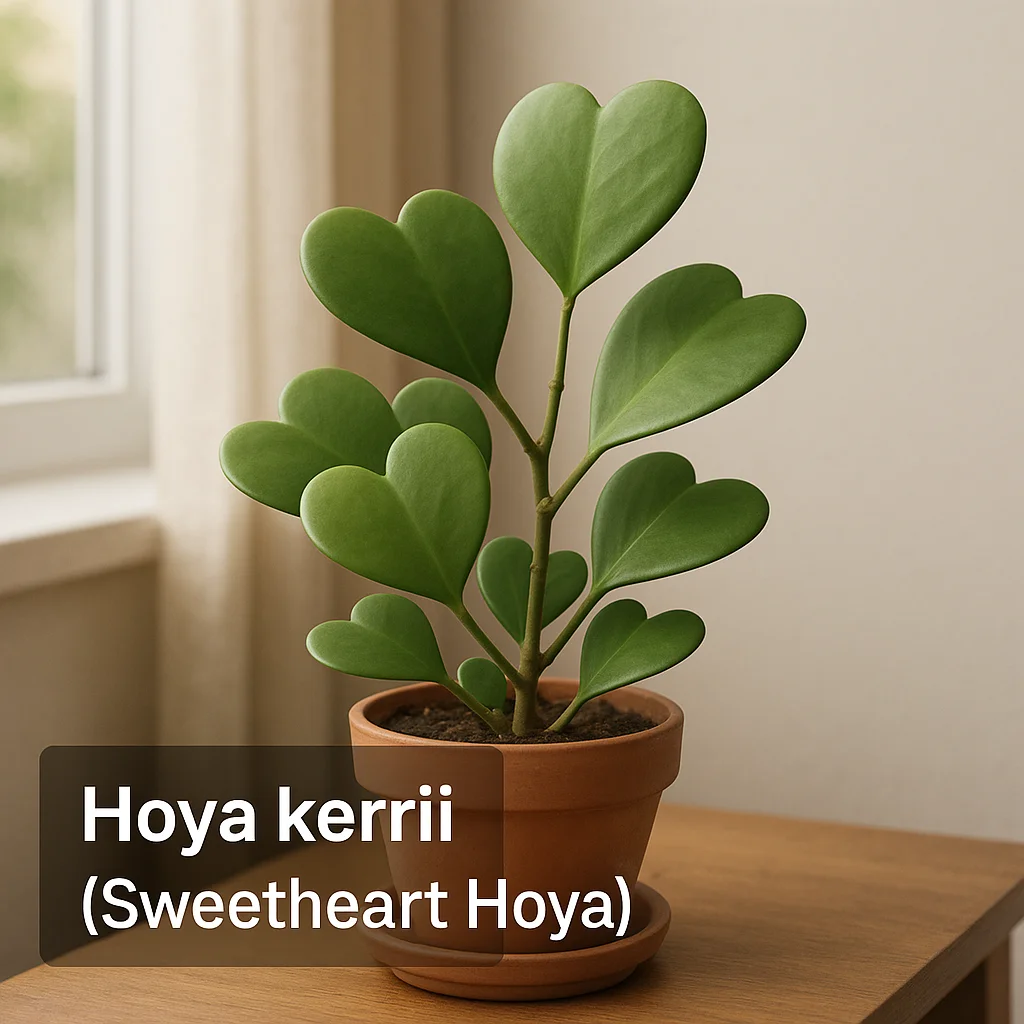
The Hoya kerrii, often affectionately called the "Sweetheart Hoya" or "Valentine Hoya," is a charming addition to any indoor plant collection. Known for its heart-shaped leaves, this plant is as delightful as it is easy to care for.
- Common names: Sweetheart Hoya, Valentine Hoya, Heart Leaf Hoya
- Scientific name: Hoya kerrii
- Plant type: Succulent vine
- Growth habit: Trailing or climbing
- Typical indoor size range: 1 to 3 feet long
- Growth speed: Slow
- Lifespan: Can live many years with care
- Origin: Southeast Asia (Thailand, Indonesia)
- Light preference: Bright indirect light
- Water needs: Low to moderate; prefers drying out between watering
- Temperature & humidity preference: Warm and humid environments
- Pet safety: May be irritating/toxic to pets if ingested
- Difficulty: Easy
🔍 Identification & Look-Alikes
Sweetheart Hoya is most recognizable for its distinctive heart-shaped leaves which are fleshy and succulent. These leaves typically grow on a vine that, when mature, can produce clusters of small, star-shaped flowers. The foliage is generally a deep green, but variegated types can feature lighter or yellowish tones.
Despite their unique appearance, Hoyas can sometimes be mistaken for other succulent plants. However, the heart shape of its leaves is a clear distinguishing feature.
- Heart-shaped, thick, succulent leaves
- Vine structure that can be either hanging or climbing
- Rich green foliage; variegated types possible
- Compact clusters of small, fragrant, star-like flowers in ideal conditions
- Typically grown more for foliage than flowers indoors
- Can resemble other Hoyas; look for the distinctive leaf shape
- Top ID Tips:
- Check for heart-shaped leaves
- Fleshiness of the leaves
- Vine growth pattern
- Presence of occasional flowers
- Leaf color and variegation
- Overall shape and arrangement
🌍 Origin & Natural Habitat
Hoya kerrii hails from the lush forests of Southeast Asia, predominantly in countries like Thailand and Indonesia. In its native habitat, the plant grows as an epiphyte, often found clinging to the bark of trees. It thrives in the humid, warm conditions of these tropical regions.
Knowing its origins can inform its care: replicating the bright, indirect light and high humidity of its native environment can help it thrive indoors.
☀️ Light Requirements
Sweetheart Hoya enjoys bright, indirect light. Ideal locations include east or west-facing windows where the plant can receive moderate sunlight filtered through sheer curtains. Direct, harsh sunlight might scorch the leaves, while insufficient light can retard growth and make the plant more leggy.
Variegated varieties may express more colors with slightly higher light levels.
- Best in bright, indirect light
- Avoid direct midday sun; morning sun is preferred
- Can tolerate lower light for short periods
- Watch for leaf burn in direct sunlight
- Slow growth or leaf drop may indicate insufficient light
- Use artificial grow lights if necessary
- Light Checklist:
- Place near bright windows
- Monitor for sunburn
- Adjust positioning seasonally
- Consider supplemental lighting
- Check variegation levels under different lights
- Adjust for excessive leggy growth
💧 Watering & Humidity
Hoya kerrii thrives on a soak-and-dry watering rhythm. Allow the soil to dry out completely between waterings. Adjust the watering frequency depending on pot size and light levels; smaller pots dry out faster. During the growing season, it may need more frequent watering, while winter dormancy calls for reduced watering.
This plant appreciates humidity, but it is fairly adaptable to average household conditions. Increasing humidity with a pebble tray or grouping it with other plants can be beneficial.
Signs of overwatering include yellowing leaves and root rot, while underwatering may cause leaf shriveling.
- Drought-tolerant but prefers thorough watering
- Water when the top 2-3 inches of soil are dry
- Avoid waterlogged soil
- Increase frequency if leaves start to wrinkle
- Use room temperature water
- Maintain consistent watering rhythm
- Watering Tips:
- Check soil moisture regularly
- Ensure drainage in pots
- Use rainwater if possible
- Monitor leaf condition
- Avoid splashing leaves when watering
🐛 Soil, Pot & Repotting
Choose well-draining, airy soil for your Sweetheart Hoya to prevent root rot. A mix designed for cacti and succulents or one with added perlite can provide the necessary drainage. When potting, select a container with drainage holes to avoid waterlogged conditions.
Repotting is typically necessary every 2-3 years or when the plant becomes rootbound, indicated by roots growing out of the drain holes or slowed growth. Upsize the pot conservatively to avoid excessive moisture retention.
- Use cactus/succulent mix with good drainage
- Pot with holes for drainage is essential
- Repot when roots are crowded
- Spring is the best time for repotting
- Avoid oversized pots
- Inspect roots during repotting
- Repotting Checklist:
- Check for root overgrowth
- Prepare fresh soil mix
- Handle roots gently
- Ensure new pot is just slightly larger
- Water after repotting only once settled
🌡️ Temperature, Airflow & Seasonal Care
The ideal temperature range for Hoya kerrii is between 60°F and 80°F (15°C to 27°C). It appreciates a stable environment without sudden temperature drops. Protect it from drafts, AC vents, and heat sources.
In winter, growth slows down, and the plant may enter a dormancy-like state. Reduce watering but maintain humidity and warmth. Ensure adequate airflow without cold drafts to prevent mold or fungal issues.
- Prefers stable indoor temperatures
- Avoid cold draughty areas
- Maintain humidity in colder months
- Adjust watering schedule in winter
- Introduce gentle airflow if possible
- Seasonal Notes:
- Track seasonal temperature changes
- Avoid drastic humidity fluctuations
- Position away from heating sources
- Reduce watering during dormancy
- Observe leaf condition during seasonal changes
🌸 Flowers, Fruit & Growth Cycle
Hoya kerrii can produce fragrant, star-shaped flowers under optimal conditions, typically during the warm seasons. Blooming indoors is rare and requires patience and ideal conditions.
Its growth cycle involves the development of new leaves and elongation of vines. Pruning is mostly for controlling shape and size rather than necessity, and should be done with sanitized tools to avoid disease spread.
🧬 Propagation & Reproduction
Hoya kerrii is primarily propagated through stem cuttings, often taken from a node with at least one healthy leaf attached. These are then placed in water or directly in soil until roots develop.
Although slightly challenging due to its slow growth, patience and cautious care during propagation can yield success.
- Stem cuttings are the most effective propagation method
- Ensure each cutting has nodes
- Use sterile tools for cutting
- Rooting hormones can increase success rates
- Propagation Tips:
- Choose healthy stems
- Provide bright, indirect light for cuttings
- Keep cuttings in humid but not waterlogged conditions
- Be patient; growth can be slow
🌿 Common Problems, Pests & Prevention
Common issues with the Hoya kerrii include yellowing leaves, brown tips due to overwatering, and drooping from poor lighting. Keep an eye out for pests such as spider mites, mealybugs, and scale.
Prevent pest problems by keeping leaves clean and ensuring proper airflow. Stable care and avoidance of overwatering can mitigate many common issues.
- Check for yellowing from overwatering
- Be alert for mites, mealybugs, and scale
- Clean leaves regularly
- Maintain stable care routine
- Use neem oil sprays for preventive care
- Prevention Basics:
- Isolate new plants
- Monitor for pest invasion
- Create an unsuitable environment for pests
- Provide airflow to deter fungus
- Adjust watering in response to leaf condition
🐾 Pet & Home Safety Notes
The Sweetheart Hoya may cause mild irritation if ingested by pets or children. While not typically severe, it's wise to place the plant out of reach of curious pets or toddlers.
If you suspect ingestion, contact a professional or local poison control resources for guidance. Consider plant stands or hanging baskets as safe display options.
🏡 Styling Ideas & Best Room Placement
Hoya kerrii fits well in a variety of indoor environments. Its trailing vines are perfect for hanging baskets in bright kitchens or bathrooms. It pairs nicely with other tropical plants such as ferns and pothos for a lush look.
- Great for hanging baskets or shelf displays
- Pair with other tropicals for variety
- Ideal in kitchens or bathrooms for a pop of green
- Use small trellises for trained vertical growth
- Compliments clean, minimalist designs
📌 Summary
- Recognize by its heart-shaped, succulent leaves
- Native to Southeast Asia; thrives in humid conditions
- Prefers bright, indirect light; avoid direct midday sun
- Water when soil is dry; keep humidity in average to high range
- Use well-draining soil; repot every few years as needed
- Keep temperatures stable; avoid drafts and sudden changes
- Propagation through stem cuttings with patience
- Common issues include yellow leaves and pest infestation
- Pet safe placement is advisable due to potential irritation
- Easy care plant, ideal for beginners