🌱 Hoya pubicalyx
🧾 Quick Facts
Hoya pubicalyx is a captivating and low-maintenance houseplant, known for its waxy leaves and star-shaped flowers that can add a touch of exotic beauty to any space. Often grouped with other Hoya species due to similar care requirements, this plant is cherished by both novice and experienced plant enthusiasts.
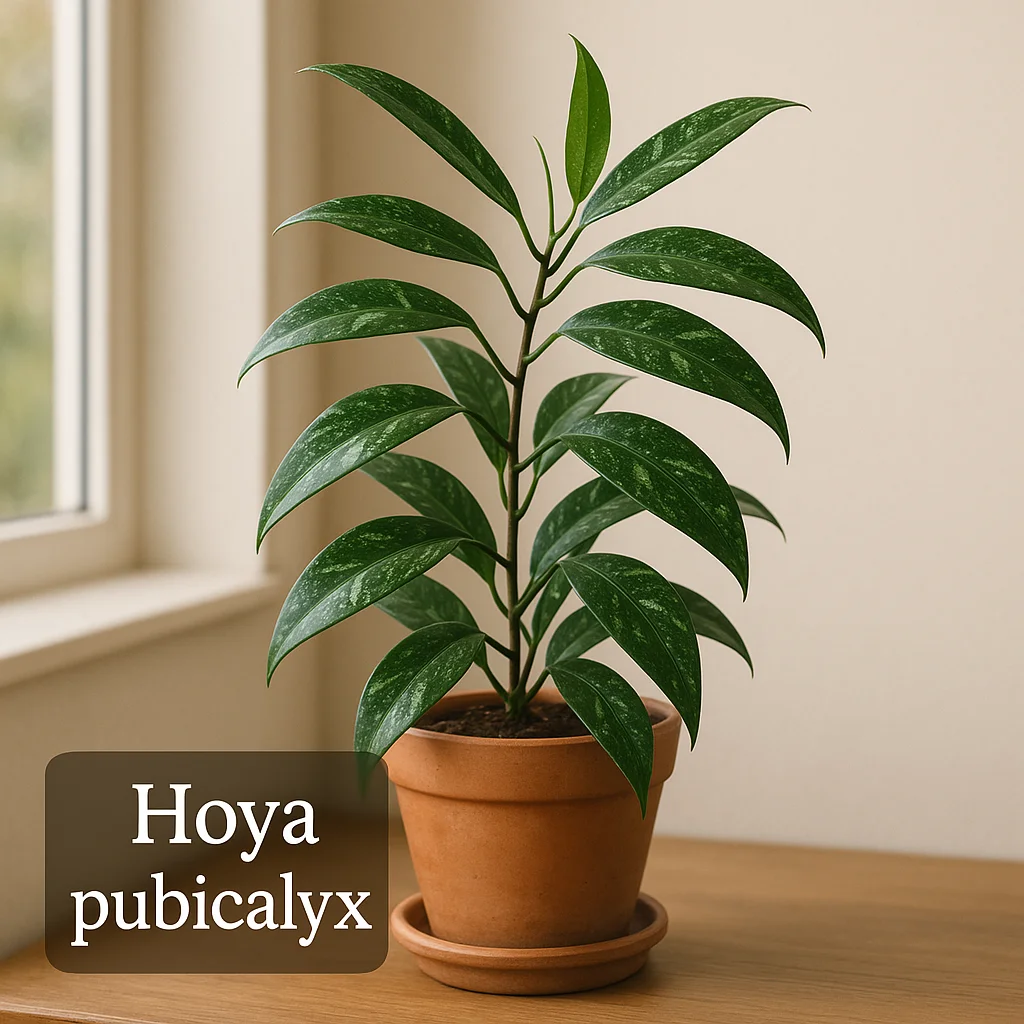
- Common Names: Wax Plant, Porcelain Flower
- Scientific Name: Hoya pubicalyx
- Plant Type: Flowering vine
- Growth Habit: Climbing, trailing
- Typical Indoor Size Range: Up to 6-10 feet in length
- Growth Speed: Moderate
- Lifespan: Can live many years with proper care
- Origin: Philippines; tropical forests
- Light Preference: Bright indirect light; tolerates some direct sun
- Water Needs: Moderate; prefers to dry out slightly between watering
- Temperature & Humidity Preference: Warm temperatures and high humidity
- Pet Safety: May be irritating or toxic to pets
- Difficulty: Medium
🔍 Identification & Look-Alikes
Hoya pubicalyx boasts vibrant green, lanceolate leaves with a glossy texture. The leaves grow opposite each other along the vine, sometimes showing silvery flecks depending on light exposure. The stems are wiry and can climb or trail elegantly, making them perfect for both hanging baskets and climbing supports.
This species is primarily cherished for its clusters of small, star-shaped flowers that can appear deep pink or red. While often compared to Hoya carnosa, Hoya pubicalyx can be distinguished by narrower leaves and distinct floral characteristics.
- Top ID Tips:
- Glossy, lanceolate leaves with potential silvery flecks
- Star-shaped, predominantly pink or red flowers
- Opposite leaf arrangement on wiry stems
- Distinct sweet fragrance when flowering
- Smaller leaf size compared to similar Hoyas
- Prefers a climbing or trailing habit
- Variegation may be enhanced in brighter light
- Flowers tend to cluster tightly, creating a spherical effect
🌍 Origin & Natural Habitat
Hoya pubicalyx is native to the lush forests of the Philippines, where it thrives as an epiphyte, growing naturally on trees. Its habitat is characterized by high humidity and warm temperatures, with dappled light filtering through the forest canopy. Understanding its origin helps in replicating these conditions indoors, emphasizing the need for humidity and indirect light.
In its natural habitat, this Hoya experiences periods of rain followed by dry spells, which influences its watering pattern as a houseplant. By mimicking these conditions, plant enthusiasts can promote healthier growth and more frequent blooming indoors.
☀️ Light Requirements
Hoya pubicalyx thrives in bright, indirect light. Placing it near an east or west-facing window is ideal, where it can soak up soft morning or afternoon sun. Too much direct sunlight can scorch the leaves, while low light may hinder flowering and growth.
Adjusting its position based on seasonal light changes can help maintain its vibrant foliage and promote blooming. A balance of light ensures the variegation and health of the plant.
- Light Checklist:
- Bright, indirect indoor light is optimal
- Limited direct sunlight for short periods
- East or west-facing windows recommended
- Rotate plant for even light exposure
- Too much sun can cause leaf burn
- Insufficient light may prevent blooming
- Variegation might be more pronounced with increased light
- Monitor light changes with seasons
- Supplement low light with artificial grow lights
💧 Watering & Humidity
Water Hoya pubicalyx thoroughly, allowing the soil to dry out between watering sessions. During the growing season, more frequent watering is required, while in dormant periods, reduce watering significantly. The plant can be quite forgiving of occasional neglect but avoid overwatering, which can lead to root rot.
Hoya pubicalyx benefits from increased humidity levels. Consider placing it near a humidifier or use a pebble tray to maintain ambient humidity. Watching for signs of under or overwatering can help guide your care routine.
- Watering Tips:
- Allow soil to dry slightly between waterings
- Avoid standing water in the pot
- Increase frequency in spring/summer
- Reduce watering in fall/winter
- Opt for distilled or rainwater to avoid mineral build-up
- Check topsoil moisture before watering
- Use a pot with good drainage
- Watch for yellow leaves as a sign of overwatering
- Brown leaf tips may indicate underwatering or low humidity
🐛 Soil, Pot & Repotting
Hoya pubicalyx prefers a well-draining, airy potting mix. A blend of orchid bark, perlite, and standard potting soil can foster healthy roots. A pot with good drainage holes is essential to prevent waterlogged conditions. Terracotta pots are recommended as they allow for better airflow and moisture regulation.
Repotting should be done when the roots are visibly cramped or growth slows. Spring is the ideal time for this task, choosing a pot just one size larger to avoid overstimulating root space unnecessarily.
- Repotting Checklist:
- Use a well-draining mix of soil, bark, and perlite
- Ensure pot has sufficient drainage holes
- Terracotta pots help regulate soil moisture
- Repot every 2–3 years during spring
- Choose pot one size up from current
- Gently untangle roots when repotting
- Monitor for signs of being rootbound
- Promote drainage with a pebble layer at the base
- Minimize root disturbance as much as possible
🌡️ Temperature, Airflow & Seasonal Care
Hoya pubicalyx enjoys temperatures ranging from 60°F to 80°F (15°C to 27°C). They dislike sudden temperature changes, so avoid placing them near drafts, heaters, or AC units. During winter, growth slows, and the plant may require less water.
Maintaining consistent airflow without cold drafts can help prevent fungal diseases, which are sometimes exacerbated by stagnant, humid air.
- Seasonal Notes:
- Optimal temperature: 60°F to 80°F (15°C to 27°C)
- Avoid placing in drafty areas
- Keep away from heater or AC vents
- Water less during cooler months
- Provide ventilation without direct drafts
- Monitor for signs of temperature stress
- Hand-trim any damaged leaves in spring
- Consider relocating in winter to a brighter spot
🌸 Flowers, Fruit & Growth Cycle
Hoya pubicalyx is known to flower indoors under optimal conditions, typically during the warmer months. The flowers cluster into umbels featuring multiple small, star-shaped blooms with a sweet fragrance. Indoor fruiting is rare and often unnecessary for cultivation.
New growth is usually evidenced by additional leaves along the vines. Pruning should be minimal and strategic, focusing on maintaining shape and removing only what’s necessary.
🧬 Propagation & Reproduction
Propagation of Hoya pubicalyx is generally achieved through stem cuttings. Choose a healthy cutting with at least two nodes and root it in water or a moist substrate. Division or leaf propagation is less common. Seeds are not generally utilized by home growers due to complexity.
- Propagation Tips:
- Take cuttings from healthy vines
- Ensure cuttings have at least two nodes
- Root cuttings in water or moist soil
- Maintain humidity by covering with a plastic dome
- Be patient with root development
- Observe for rot on cuttings
- Reduce watering for newly rooted plants
- Propagate in spring or early summer
🌿 Common Problems, Pests & Prevention
Common problems with Hoya pubicalyx include yellowing leaves, browning tips, and slow growth, often due to incorrect watering or light. Pests such as spider mites, mealybugs, and scale can occasionally affect the plant. Regular monitoring and maintaining stable care can minimize these issues.
Preventive measures include gently cleaning leaves, maintaining proper air circulation, and quarantining new or infested plants to protect your collection.
- Prevention Basics:
- Monitor for pests during regular watering
- Wipe leaves to remove dust and deter pests
- Quarantine new plants before introducing them
- Encourage airflow around the foliage
- Avoid overwatering to prevent root rot
- Inspect plants for subtle changes
- Seasonally adjust care routines
- Trim affected areas promptly
🐾 Pet & Home Safety Notes
Parts of Hoya pubicalyx might be irritating or toxic to pets if ingested. Keeping the plant out of reach of curious pets and children is advisable. Safe placement strategies such as elevated planters or hanging baskets can prevent accidental ingestion.
If ingestion is suspected, promptly contact a professional or use local poison control resources for advice.
🏡 Styling Ideas & Best Room Placement
The appealing vines of Hoya pubicalyx make it well-suited for bathrooms, kitchens, or living rooms where bright, indirect light is available. Hanging baskets or moss poles can enhance its appearance while supporting its natural climbing habit. It's also a lovely companion for other tropical houseplants in group arrangements, juxtaposing beautifully with plants featuring broader leaves.
📌 Summary
- Identified by glossy leaves with possible silvery flecks
- Originates from tropical forests of the Philippines
- Thrives in bright, indirect light
- Water moderately, allowing for slight dry spells
- Prefers well-draining, airy soil mix
- Enjoys warm temperatures with good airflow
- Common propagation via stem cuttings
- Watch for common pests and adjust care seasonally
- Medium difficulty, suits both new and seasoned growers
- Keep away from pets and children as it may be irritating