🌱 Monstera adansonii
🧾 Quick Facts
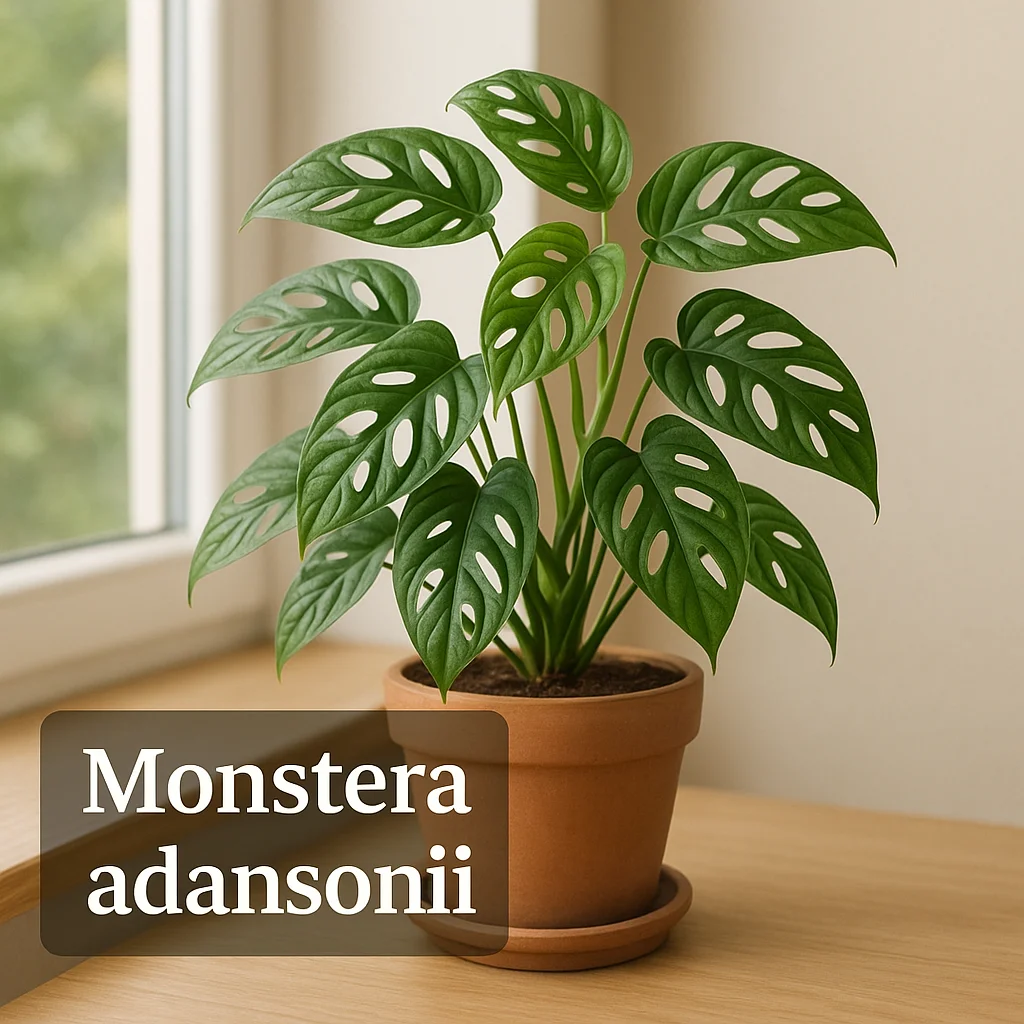
The Monstera adansonii, often referred to as the Swiss cheese vine, is a popular houseplant known for its uniquely perforated leaves. This plant brings a touch of the tropics with its climbing or trailing habit, making it a favorite among indoor plant enthusiasts.
- Common names: Swiss cheese vine, Five Holes Plant
- Scientific name: Monstera adansonii (varies / commonly listed as)
- Plant type: Vine
- Growth habit: Climbing, trailing
- Typical indoor size range: 3–6 feet in length
- Growth speed: Moderate to fast
- Lifespan: Can live many years with good care
- Origin: Central and South America (tropical forests)
- Light preference: Bright indirect; tolerates lower light
- Water needs: Moderate; prefers drying slightly between waterings
- Temperature & humidity preference: Prefers warm, humid conditions
- Pet safety: May be irritating/toxic to pets
- Difficulty: Medium
🔍 Identification & Look-Alikes
The Monstera adansonii is recognized by its characteristic elongated, perforated leaves that become more fenestrated as the plant matures. Each leaf is a vibrant green and has a leathery texture. The plant typically grows on vines that can either trail down or climb up using support structures like a moss pole. Although flowers are rare indoors, the Monstera is mainly cultivated for its unique foliage.
- Leaf shape: Long and narrow with holes
- Leaf texture: Leathery
- Leaf arrangement: Alternating along the vine
- Vine structure: Flexible, trailing or climbing
- Color: Deep green; vibrant in bright light
- Common look-alikes: Monstera deliciosa, pothos
- Top ID Tips:
- Look for small to medium-sized leaves with holes
- Deep green, shiny surface
- Find the long, vining stems
- Notice the leaf perforations distinguishing it from pothos
- More holes develop with maturity
- Ensure whole plant image for identification
🌍 Origin & Natural Habitat
Monstera adansonii is native to the tropical rainforests of Central and South America. These regions provide warm, humid environments where the plant grows as an understory climber, often found gripping onto trees and larger plants. Understanding this natural habitat underscores the plant's preference for humid and warm indoor conditions. Seasonal monsoons in its native lands hint at the periodic needs for moisture in a controlled indoor setting.
☀️ Light Requirements
Monstera adansonii thrives best in bright, indirect light, which replicates its natural understory habitat. Direct sunlight may scorch its leaves, while too little light can lead to slow growth and reduced leaf fenestration. Ideal indoor placement is near east-facing windows or a few feet back from south-facing ones. Monitor for pale or overly dark leaves as signs of inappropriate lighting conditions.
- Light Checklist:
- Bright, indirect light preferred
- Avoid harsh, direct sunlight
- East-facing window ideal
- Check for signs of leaf scorch
- Move closer to light if leggy
- Rotate plant for even light exposure
💧 Watering & Humidity
A consistent soak-and-drain method is best for Monstera adansonii, allowing the soil to slightly dry out between waterings. In terms of humidity, aim for moderate to high levels, mimicking its native humid tropics. Increase ambient moisture by grouping plants or using a pebble tray. Watch for overwatering signs like yellow leaves and root rot, and adjust the watering frequency accordingly.
- Watering Tips:
- Water when top inch of soil is dry
- Ensure pot has drainage holes
- Increase humidity via a tray with stones and water
- Use room-temperature water
- Watch for yellow leaves (overwatering)
- Allow soil to dry out slightly before the next watering
🐛 Soil, Pot & Repotting
The ideal soil mix for Monstera adansonii is one that is airy and well-draining yet retains some moisture, such as a mix of peat-based potting soil with perlite or orchid bark. Choose a pot with adequate drainage, leaning toward terracotta for breathability. Repotting should occur when the plant becomes rootbound, typically every 2-3 years, in spring. Steps include gently removing the plant, trimming unhealthy roots, and potting in a slightly larger container.
- Repotting Checklist:
- Use an airy, well-draining soil mix
- Choose pots with drainage holes
- Terracotta provides better air circulation
- Repot every 2-3 years or when rootbound
- Handle roots gently during repotting
- Trim dead or rotting roots when repotting
🌡️ Temperature, Airflow & Seasonal Care
Monstera adansonii thrives in a warm indoor climate, ideally between 65°F to 85°F (18°C to 29°C). Avoid cold drafts and positioning near heating or AC vents due to temperature fluctuations. During winter, the plant’s growth slows, so decrease watering and avoid fertilization. Maintain consistent humidity to counteract dry indoor heating effects.
- Seasonal Notes:
- Keep temperature stable between 65°F to 85°F
- Avoid sudden temperature changes
- Winter growth slows: reduce watering
- Guard against dry indoor heat in winter
- Protect from cold drafts and vents
🌸 Flowers, Fruit & Growth Cycle
While flowering is uncommon indoors, a Monstera adansonii in optimal conditions may produce small, white inflorescences. The rarity of blooming means the plant is primarily appreciated for its foliage. Growth involves spreading via runners and canes; it benefits from regular pruning to control size and shape. Trim away dead leaves to keep the plant healthy and promote new growth.
🧬 Propagation & Reproduction
Propagation of Monstera adansonii is typically done through stem cuttings, where a section of the vine with at least one node is rooted in water or soil. This plant roots readily in water, making propagation relatively straightforward for home growers. Although seeds are an option, they are less common and suitable for dedicated plant hobbyists.
- Propagation Tips:
- Use stem cuttings with at least one node
- Root cuttings in water or directly in soil
- Maintain high humidity during rooting
- Trim leaves to focus energy on root growth
- Patience is key as roots develop
🌿 Common Problems, Pests & Prevention
Common issues include yellow leaves (often from overwatering), brown tips (usually due to low humidity), and leggy growth (indicating insufficient light). Pests such as spider mites, mealybugs, and scale can be occasional problems. Prevent issues by maintaining stable care, cleaning leaves, and ensuring good airflow around the plant.
- Prevention Basics:
- Inspect new plants to prevent pest introduction
- Clean leaves regularly to remove dust
- Maintain adequate humidity levels
- Avoid overwatering to prevent root rot
- Ensure consistent light and temperature
- Provide airflow to prevent mold and pests
🐾 Pet & Home Safety Notes
Monstera adansonii's sap contains calcium oxalates, which may irritate pets and children if ingested. Symptoms are typically mild but can include oral irritation. For safety, keep plants out of reach using plant stands or hanging baskets, and promptly seek professional advice if ingestion occurs.
🏡 Styling Ideas & Best Room Placement
The versatile Monstera adansonii can be styled in various indoor settings. Place it in a living room near indirect light or a bathroom for natural humidity. Its trailing nature suits hanging baskets or climbing up moss poles. Pair with other tropical foliage plants to create a lush, green corner.
📌 Summary
- ID highlights: Fenestrated leaves on vining stems
- Origin: Tropical rainforests of Central and South America
- Light: Prefers bright, indirect light
- Watering: Moderate; let soil dry slightly between waterings
- Soil/repotting: Well-draining soil, repot every 2-3 years
- Temperature: Thrives in 65°F to 85°F range
- Propagation: Stem cuttings in water or soil
- Common issues: Yellow leaves, pests like spider mites
- Difficulty: Medium care needs
- Key cautions: May be irritating/toxic to pets and children