🌱 Philodendron micans
🧾 Quick Facts
The Philodendron micans is a stunning indoor plant known for its velvety foliage and trailing vines. It is loved by houseplant enthusiasts for its ease of care and aesthetic appeal. Here's a concise summary of what you need to know:
- Common names: Velvet Leaf Philodendron, Black Gold Philodendron
- Scientific name: Philodendron micans
- Plant type: Foliage vine
- Growth habit: Trailing
- Typical indoor size: 1-3 feet long vines
- Growth speed: Moderate
- Lifespan: Can live many years with proper care
- Origin: Central America, Caribbean
- Light preference: Medium to bright indirect light
- Water needs: Moderate, let the soil dry out between waterings
- Temperature & humidity preference: Prefers warm temperatures and moderate to high humidity
- Pet safety: May be irritating or toxic to pets
- Difficulty: Easy
🔍 Identification & Look-Alikes
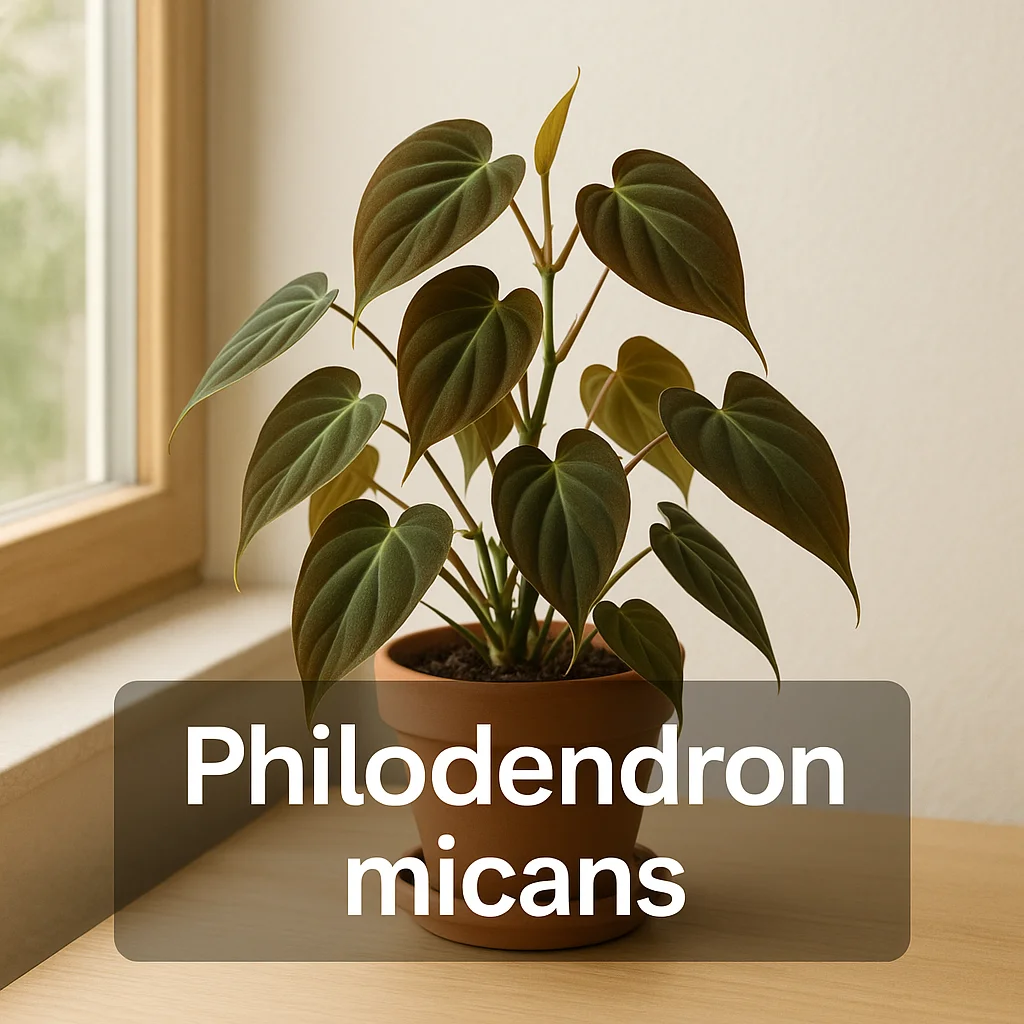
Philodendron micans is easily recognizable by its heart-shaped leaves that have a velvety texture and a rich green to deep bronze color. The undersides of the leaves often display a reddish hue. Its trailing vines are thin and flexible, making it ideal for hanging baskets or climbing up a support. The plant is primarily grown for its foliage as it rarely flowers indoors.
Common look-alikes include other heart-leaf philodendrons. To differentiate, note the unique velvety texture and color variance under certain light conditions, which is specific to micans.
- Heart-shaped, velvety leaves
- Deep green to bronze leaf color
- Red-toned leaf undersides
- Thin, flexible vines
- Primarily grown for foliage
- Distinctive color variance under different light
- Rarely flowers indoors
🌍 Origin & Natural Habitat
Philodendron micans is native to the subtropical regions of Central America and the Caribbean. In the wild, it thrives as an understory plant in humid tropical forests, often climbing trees as an epiphyte. Understanding its natural preference for humidity and indirect light helps guide its indoor care, providing similar conditions for optimal growth.
☀️ Light Requirements
Philodendron micans prefers medium to bright indirect light, mimicking the dappled sunlight of its natural forest habitat. Ideally, place it near an east or west-facing window. Direct sunlight can scorch the leaves, while too little light may slow growth and reduce leaf vibrancy.
- Place near east or west windows
- Avoid direct sunlight
- Bright indirect light enhances leaf color
- Signs of too little light: slow growth, fading leaves
- Signs of too much light: scorched leaf tips
- Filter strong sunlight with sheer curtains
- Rotate the plant for even growth
💧 Watering & Humidity
Water Philodendron micans when the top inch of soil feels dry. Use the soak-and-drain method to thoroughly water the plant, then allow it to dry out partially before watering again. This plant enjoys moderate to high humidity, which can be managed with a humidifier or pebble tray. Be cautious of overwatering, as it can lead to root rot.
- Water when the top inch of soil is dry
- Avoid waterlogged soil
- Maintain moderate to high humidity
- Use a humidifier if necessary
- Watch for overwatering signs: wilting stems, yellowing leaves
- Watch for underwatering: crisp, dry leaves
- Adjust watering with seasonal temperature changes
- Smaller pots may need more frequent watering
🐛 Soil, Pot & Repotting
Philodendron micans thrives in a well-draining, airy soil mix. A combination of peat, perlite, and a bit of orchid bark works well. Choose pots with drainage holes to prevent waterlogging. Repot when you notice root binding or when growth has slowed. Gently transfer into a slightly larger pot, being careful with the delicate roots.
- Use well-draining, airy soil mix
- Ensure pots have drainage holes
- Repot every 1-2 years or when rootbound
- Repot in spring for optimal growth
- Handle roots gently during repotting
- Choose slightly larger pots for repotting
- Prevent soil compaction during repotting
🌡️ Temperature, Airflow & Seasonal Care
This plant enjoys warm indoor temperatures ranging from 65°F to 75°F (18°C to 24°C) and generally dislikes sudden temperature changes or drafts. Position your plant away from air conditioners and heating vents. During winter, reduce watering as growth slows. A healthy airflow around the plant can prevent mold and pest issues.
- Maintain temperatures between 65°F to 75°F (18°C to 24°C)
- Avoid drafts and sudden temperature changes
- Decrease watering during winter months
- Keep away from AC units/heaters
- Ensure good airflow around the plant
- Be mindful of seasonal lighting changes
- Use a fan for air circulation in stagnant rooms
🌸 Flowers, Fruit & Growth Cycle
Philodendron micans is primarily grown for its decorative foliage rather than flowers. While it can flower indoors, blossoms are rare and small. Its growth pattern involves trailing vines producing new leaves from nodes, which may grow aerial roots. Pruning back longer vines helps manage its shape and encourages bushier growth.
🧬 Propagation & Reproduction
Philodendron micans is straightforward to propagate, primarily through stem cuttings. Cut a section of the vine just below a node, remove lower leaves, and place it in water or moist soil until roots develop. Division at the root level is another option when repotting.
- Propagate via stem cuttings
- Cut below a node for best results
- Remove leaves from lower cutting end
- Root cuttings in water or soil
- Use division during repotting
- Ensure cuttings have several nodes
- Create a mini greenhouse effect with plastic bags for humidity
🌿 Common Problems, Pests & Prevention
Common issues include yellowing leaves due to overwatering or insufficient humidity and brown tips due to underwatering. Watch for pests like spider mites and mealybugs. Prevent problems by maintaining consistent care and cleaning leaves regularly. Using a gentle stream of water can help dislodge pests.
- Avoid overwatering to prevent yellow leaves
- Increase humidity for vibrant foliage
- Use regular leaf cleaning to prevent pests
- Manage pests like spider mites and mealybugs
- Inspect new plants before introducing them
- Keep leaves dust-free for optimal photosynthesis
- Provide stable temperature and humidity
🐾 Pet & Home Safety Notes
All parts of Philodendron micans contain calcium oxalates, which can be irritating or toxic if ingested by pets or children. To prevent accidental ingestion, place the plant out of reach or use barriers. If ingestion occurs, promptly contact a professional or local poison control resources for guidance.
🏡 Styling Ideas & Best Room Placement
The Philodendron micans is versatile in home styling. It thrives in well-lit bathrooms or kitchens with higher humidity or can be placed in living rooms and offices with bright indirect light. Utilize hanging baskets to showcase its trailing habit, or train it on a moss pole. Pair it with ferns or tropical plants for a lush display.
📌 Summary
- ID highlights: Velvety heart-shaped leaves, trailing vines
- Origin: Central America, Caribbean
- Light: Prefers bright indirect light
- Watering: Moderate, allow soil to dry slightly
- Soil/repotting: Well-draining mix, repot when rootbound
- Temperature: Prefers 65°F to 75°F (18°C to 24°C)
- Propagation: Easily done via stem cuttings
- Common issues: Yellowing leaves, pests like spider mites
- Difficulty: Easy to care for
- Key cautions: May be toxic if ingested by pets