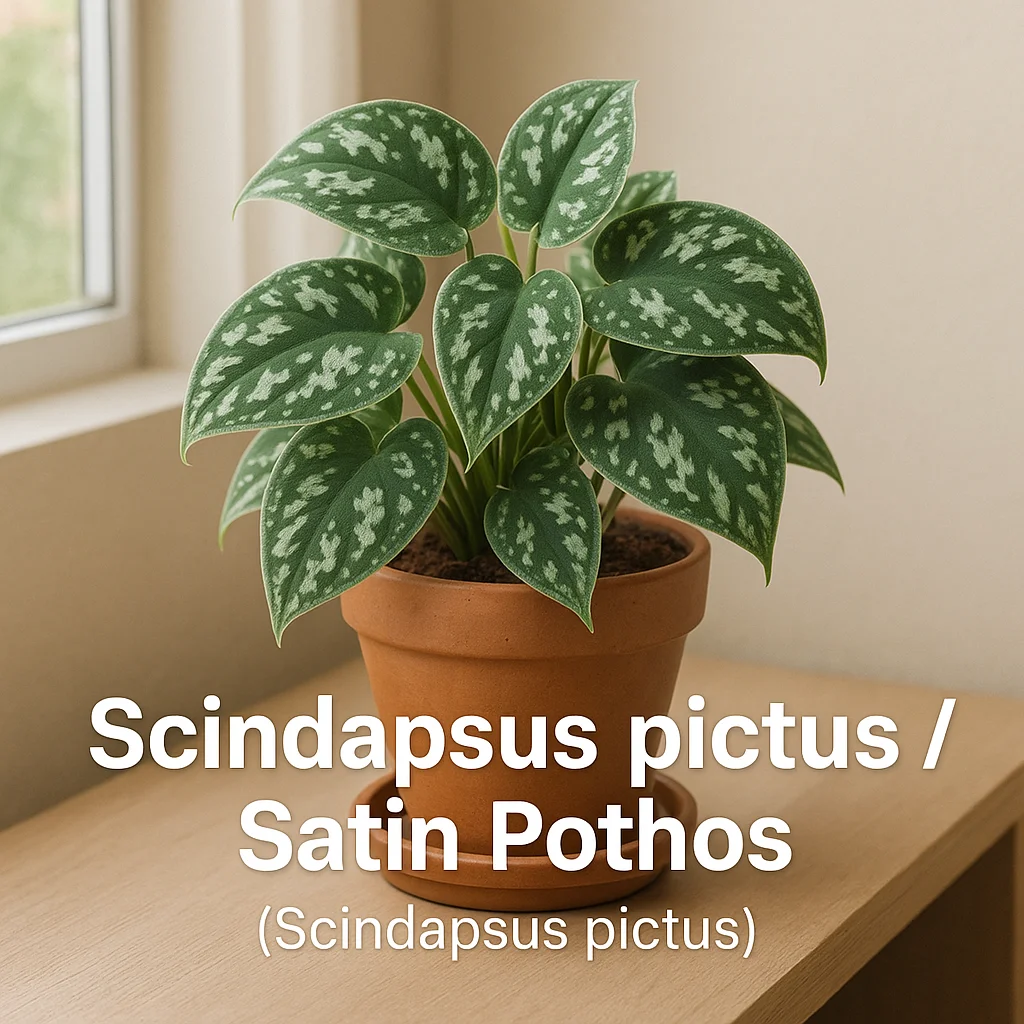
🌱 Scindapsus pictus / Satin Pothos (Scindapsus pictus)
🧾 Quick Facts
The Scindapsus pictus, commonly known as Satin Pothos, is a popular houseplant known for its beautiful, satin-like, heart-shaped leaves. It is a trailing vine that adds a touch of elegance to any indoor setting.
- Common names: Satin Pothos, Silver Philodendron, Silver Vine
- Scientific name: Scindapsus pictus
- Plant type: Vine, foliage
- Growth habit: Trailing, climbing
- Typical indoor size range: 2-10 feet long; spread varies with support
- Growth speed: Moderate
- Lifespan: Can live many years with care
- Origin: Southeast Asia, tropical forest understory
- Light preference: Medium to bright indirect light
- Water needs: Moderate; prefers to dry slightly between waterings
- Temperature & humidity preference: Warm, prefers higher humidity
- Pet safety: May be irritating/toxic to pets
- Difficulty: Easy
🔍 Identification & Look-Alikes
The Satin Pothos is identifiable by its heart-shaped leaves that have a satin-like, glossy texture with unique silver variegation patterns. The leaves grow on slender, flexible vines, and the plant does not commonly flower indoors.
Look-alikes include the pothos family and philodendrons, but Scindapsus pictus can be distinguished by its distinctive silver markings, which vary by light exposure and cultivar.
- Heart-shaped, silver-variegated leaves with a satin finish
- Slender, trailing or climbing vines
- Variegation more vivid in brighter light
- Seldom flowers indoors, focus is on foliage
- Often confused with pothos and philodendrons
- Silver Philodendron is an alternate common name
- Avoids direct sunlight to maintain leaf patterns
- Typical variegation may fade in low light
🌍 Origin & Natural Habitat
Scindapsus pictus is native to Southeast Asia's tropical rainforests where it thrives under the forest canopy. It grows as a climbing and trailing vine, using trees for support. Understanding this natural habitat helps enthusiasts recreate similar conditions indoors, beneficial for healthy growth.
Its native habitats experience distinct wet and dry seasons, and the plant adjusts accordingly by thriving in humid and warm conditions while growing robust root systems in the airy understory.
☀️ Light Requirements
Satin Pothos thrives in medium to bright indirect light. Avoid direct sunlight, which can scorch the leaves and diminish their variegation pattern. An east or north-facing window provides ideal conditions, or position it a few feet away from a brighter window with a sheer curtain.
When light levels are insufficient, the plant's growth may slow, and variegation may fade. In contrast, too much light might cause leaf tips to brown or curl.
- Place near east/north-facing windows for best results
- Avoid direct sun, which can cause leaf burn
- Brighter light enhances silver variegation
- Spot fading leaves as a sign of insufficient light
- Avoid dark corners for optimal growth
- Check leaf coloration to tweak placement
- Consider grow lights in low-light settings
- Monitor for photodamage: curled or brown leaf tips
💧 Watering & Humidity
Water Scindapsus pictus moderately by allowing the top inch of soil to dry out between waterings. The frequency can vary based on pot size, light exposure, and season. It's crucial to avoid waterlogging to prevent root rot.
This plant appreciates higher humidity—50% or above is ideal. Grouping plants or using a humidifier can help achieve this level safely.
- Allow topsoil to dry slightly before watering
- Adjust watering based on season and light
- Increase frequency in warm months
- Use pots with drainage holes
- Watch for signs of overwatering: yellow leaves
- Mist leaves to raise humidity or group with other plants
- Use a humidity tray for ease
- Signs of underwatering: wilting and dry leaves
🐛 Soil, Pot & Repotting
Satin Pothos prefers a well-draining soil mix enriched with organic matter. A peat-based potting mix with added perlite is ideal. Choose pots with adequate drainage to prevent overwatering.
Repot every 2-3 years or when rootbound, opting for a pot just one size larger. Watch for roots protruding from the pot or soil that dries out increasingly fast as cues for repotting.
- Use a well-draining, peat-based potting mix
- Mix in perlite or orchid bark for aeration
- Ensure pots have drainage holes
- Repot when roots circle the pot or soil dries fast
- Upsize gradually, avoiding too large of a pot
- Gently transfer to avoid root damage
- Water after repotting to settle soil
- Consider terracotta pots for breathability
- Avoid compacted or heavy soils
🌡️ Temperature, Airflow & Seasonal Care
Maintain a comfortable room temperature of 60-85°F (15-29°C) for Satin Pothos. Avoid drafts, extreme temperature swings, and positioning near heaters or AC vents.
During winter, growth may slow, requiring less frequent watering. Regularly check soil moisture to adjust care accordingly.
- Prefers temperatures between 60-85°F
- Avoid cold drafts and rapid temperature changes
- Protect from heaters and AC vents
- Adjust watering frequency in winter months
- Consider moving to a brighter spot in winter
- Monitor for slowed growth as a seasonal norm
- Watch humidity, especially in heated/AC environments
🌸 Flowers, Fruit & Growth Cycle
Scindapsus pictus flowers rarely indoors and primarily focuses on foliage for ornamentation. When given proper care, it grows new trailing vines and leaves, requiring occasional pruning for shape.
Prune leggy growth to maintain fullness and remove damaged leaves to encourage new growth. It naturally forms longer vines that can be trained or allowed to trail gracefully.
🧬 Propagation & Reproduction
Satin Pothos is easily propagated via stem cuttings. Select a stem with at least one node and place it in water or soil until roots develop, usually in a few weeks. Regular propagation helps manage plant size and creates more plants for sharing or gifting.
- Take cuttings with at least one node
- Propagate in water or moist soil
- Roots develop in 2-3 weeks with care
- Ensure cuttings have a few leaves
- Propagate during growing season for best results
- Utilize surplus cuttings as gifts or indoor decor
🌿 Common Problems, Pests & Prevention
Satin Pothos is typically resilient but can encounter yellowing leaves, brown tips, or drooping due to incorrect watering practices or low humidity. Common pests include spider mites and mealybugs.
Prevention is key: regular inspection, maintaining stable conditions, and avoiding overwatering can prevent most issues. Clean leaves to reduce dust accumulation and improve photosynthesis efficiency.
- Yellow leaves often signal overwatering
- Brown tips might indicate low humidity
- Regularly check for common pests
- Wipe leaves clean to enhance health
- Avoid sudden environmental changes
- Stable light and watering routine reduce stress
- Quarantine new plants to avoid pest spread
🐾 Pet & Home Safety Notes
Some sources list Scindapsus pictus as irritating if ingested by pets or children. The plant contains compounds that may cause discomfort. To minimize risk, place plants out of reach and consider using barriers or training pets accordingly.
In case of ingestion, it is advisable to contact a professional or local poison control resources for guidance.
🏡 Styling Ideas & Best Room Placement
Scindapsus pictus is versatile, making it suitable for various settings such as bathrooms, kitchens, living rooms, and offices. Utilize hanging baskets, moss poles, or shelves to display its trailing vines elegantly. Pairing with taller plants can create visual interest.
For humid environments, like bathrooms or kitchens, this plant thrives and decoratively complements other houseplants due to its tolerance for variable conditions.
📌 Summary
- Heart-shaped, satin-textured leaves with silver variegation
- Native to Southeast Asia's tropical forests
- Thrives in medium to bright indirect light
- Water when top inch of soil dries
- Enjoys high humidity, currently control is beneficial
- Preferably grown in well-draining soil
- Moderate care simplicity, suitable for beginners
- Common pests include spider mites, mealybugs
- Cuttings easily propagated during growth season
- Can irritate pets if ingested
- Excellent for hanging baskets and moss poles